
.jpg)
Cyber security is a critical function essential to keeping the UK and businesses secure. However, the high-stakes nature of the profession can place a heavy strain on the individuals responsible for ensuring our ongoing defence against threats.
To understand the extent of these pressures and their impact on individuals' wellbeing and performance, Socura surveyed more than 500 security leaders. Sleepless in security lays bare the findings, highlighting the physical and mental health issues executives experience and the critical challenges keeping them awake at night.
8 in 10 security leaders say job has harmed their health
Undoubtedly, the most alarming revelation of the survey is that nearly 80% of security leaders report that working in cyber security has taken a toll on their physical or mental health. Nearly half of all respondents (48%) have experienced both physical and mental issues stemming from their roles.
Among the most prevalent symptoms of this stress are burnout or exhaustion (28%), chronic lack of sleep or insomnia (24%), and social withdrawal (23%). 13% said that their work has directly contributed to depression.

Overstretched, exhausted and in fear of their job
The survey highlights the extent to which security leaders struggle to switch off and go above and beyond in their roles. The average leader works an extra 38 days of overtime a year, with 81% feeling a very large or large obligation to monitor communications or alerts outside of their contracted hours. With work constantly on their minds, half of leaders say they experience a nightmare or stressful dream about work at least once a month (51%).
A key contributing factor to this ‘always-on’ mentality is almost certainly the immense responsibility executives shoulder. 86% are worried that they could be fired in the event of a serious cyber incident.

The effect of stress on performance and risk
Sleepless in security also shines a light on the effect stress has on the ability of security leaders to perform to their best, raising questions about the knock-on effects for an organisation’s operational risk. Over 40% of security leaders admit that when they feel overworked, stressed, or burnt out, it significantly impairs their performance.
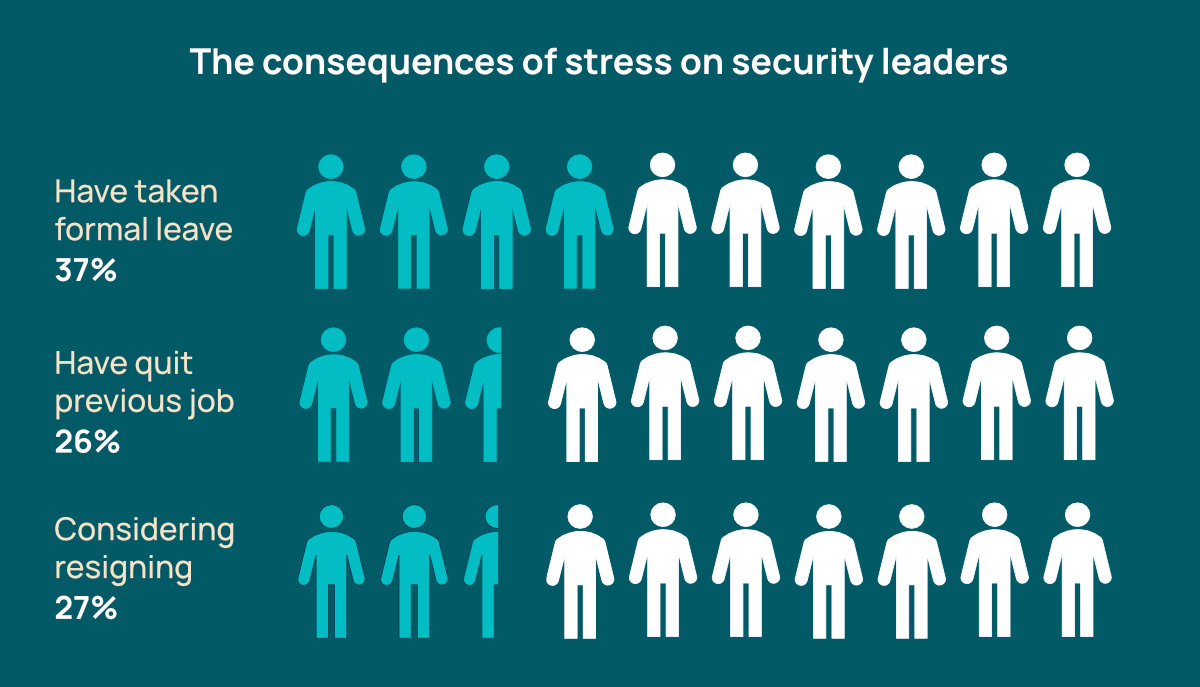
The findings also cast serious doubt on the long-term sustainability of the profession: A quarter of security leaders have already left a previous position due to workplace stress (26%), and a similar number are currently seriously contemplating resigning (27%).
Leading causes of stress
Also explored by the survey is the underlying causes of stress, with keeping pace with new threats and navigating technical complexity cited as two of the greatest challenges of being a cyber security professional.
When asked to identify their top strategic challenges, ‘keeping pace with the evolving threat landscape’ (25%) and ‘governing the use of AI and emerging technologies’ came out on top (25%).
The most common operational challenges cited by security leaders were ‘analysing and applying threat intelligence’, and ‘monitoring security posture 24/7’.
Read the report for full insights
Sleepless in security highlights a leadership community driven by a profound sense of duty. Yet, this very dedication is actively eroding practitioners' physical and mental wellbeing, making long-term retention increasingly unsustainable. Ultimately, these findings underscore an urgent need for change in the expectations surrounding the role of a security leader - no single individual should be expected to carry the burden of maintaining a 24/7 defence alone.
Read the full report for a detailed look at the survey results and for industry analysis from Andrew Kays (CEO, Socura), Nasser Arif (Cyber Security Manager, NHS), and Rebecca McKeown (Principal Psychologist at Mind Science).
Also explored
- High stakes vs. high anxiety: Leaders’ views on how they view the role
- Help or threat: Is AI easing the load or a long-term risk to job security?
- Job satisfaction: The single biggest factor leaders say would improve their work life.
- Inspiring the next generation: Do stressed-out leaders still recommend the industry?